Most beginner surfers don’t fail because they lack courage-they fail because they repeat the same avoidable mistakes.
From paddling too late to choosing the wrong board, small errors can turn a fun session into frustration, exhaustion, or even danger.
The good news: surfing improves fast when you know what to fix first. This guide breaks down the most common beginner surfing mistakes and shows you exactly how to avoid them before they become bad habits.
Beginner Surfing Fundamentals: Why Most Mistakes Start with Poor Positioning, Paddling, and Pop-Up Technique
Most beginner surfing mistakes happen before the wave even breaks. If you are lying too far back on the board, the nose lifts, your paddling becomes slow, and you miss waves; too far forward, and the board pearls. A good starting point is to keep your chest slightly raised, hips centered, and the board’s nose just a few inches above the water.
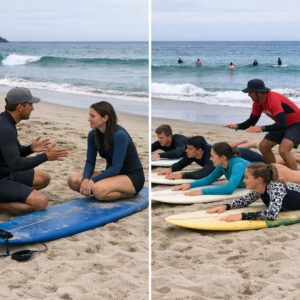
Paddling is another area where small errors get expensive fast, especially if you are paying for surf lessons, surfboard rental, or a beginner surf camp. Many new surfers splash with short, frantic strokes instead of using long, deep pulls close to the rails. In real surf schools, coaches often fix this before teaching advanced turns because poor paddling wastes energy and puts you in the wrong takeoff spot.
- Line up with a fixed landmark on shore so you notice when currents move you.
- Paddle early, not desperately, and match the wave speed before standing.
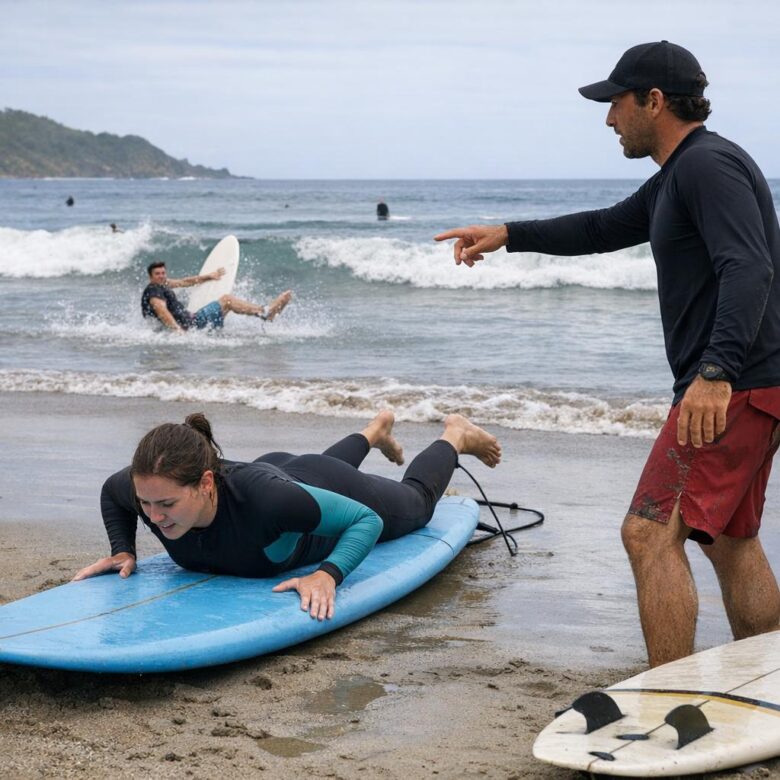
- Practice your pop-up on sand until your front foot lands between your hands.
The pop-up should feel quick but not rushed. A common real-world example is a beginner grabbing the rails, pushing to their knees, then standing too late as the board loses speed. Using a surf forecast tool like Surfline can also help you choose smaller, cleaner days, where practicing positioning and technique is safer, cheaper, and far more productive.
How to Avoid Common Surfing Mistakes in the Water: Timing Waves, Standing Up, and Controlling Speed
Most beginner surfing mistakes happen because surfers rush the wave instead of reading it. Before paddling, watch where the wave starts to steepen, then position yourself slightly outside that peak so you are not chasing whitewater or taking off too late. A surf forecast app like Surfline can help you check tide, swell direction, and wave height before paying for surfboard rental or booking surf lessons.
For timing, start paddling earlier than you think and match the wave’s speed before it lifts the tail of your board. If you feel the board drop suddenly, you waited too long; if the wave rolls under you, you were too far outside or paddled without commitment. A real-world example: on a small beach break, a beginner on an 8-foot foam board often catches more waves by paddling smoothly for 5-7 strokes before the wave reaches them, instead of sprinting at the last second.
- Standing up: Keep your hands under your ribs, not on the rails, and pop up in one clean motion with your front foot between your hands.
- Speed control: Stay low, look where you want to go, and shift weight gently forward to gain speed or slightly back to slow down.
- Board control: Avoid standing tall too soon; bent knees give you balance and help prevent nose-diving.
One useful tip from coached beginner sessions is to practice the pop-up on sand before entering the water, especially if you are using a larger soft-top surfboard. It saves energy, reduces wipeouts, and makes each paid lesson or surf camp session more productive.
Surfing Smarter as a Beginner: Choosing the Right Board, Reading Conditions, and Following Surf Etiquette
One of the most expensive beginner surfing mistakes is buying the wrong surfboard too early. A shortboard may look exciting, but most new surfers progress faster on a soft-top longboard with enough volume to paddle easily and catch small waves. If you are unsure, renting from a local surf shop or booking a beginner surf lesson is often cheaper than paying full cost for a board that does not match your weight, fitness, or local break.
Before paddling out, check the surf forecast, wind direction, tide, and swell size using a tool like Surfline. For example, a waist-high day with light offshore wind is usually better for learning than a head-high swell with strong onshore wind, even if both look “surfable” online. Conditions can change quickly, so watch the water for at least 10 minutes and notice where beginners, lifeguards, and surf schools are positioned.
- Choose the right board: prioritize stability, foam construction, and volume over performance.
- Read the lineup: avoid crowded peaks and look for slower, softer waves.
- Respect surf etiquette: never drop in, ditch your board, or paddle through someone’s ride path.
Good etiquette also protects your wallet and safety. Colliding with another surfer can damage boards, fins, leashes, or even lead to medical costs, so use a quality surf leash and keep control of your equipment. A simple rule works well: if you are unsure who has priority, do not paddle for the wave.
Wrapping Up: Common Surfing Mistakes Beginners Make and How to Avoid Them Insights
Progress in surfing comes faster when you stop measuring success by how many waves you catch and start measuring it by how well you read, position, and respond. Choose manageable conditions, respect the lineup, and give yourself permission to slow down-rushing usually creates the mistakes that hold beginners back. If you are unsure what to work on next, get feedback from a qualified instructor or experienced surfer. The smartest decision is simple: build solid habits early, stay patient, and let consistency-not force-turn difficult sessions into confident ones.