Most beginner surf injuries happen before the “real” surfing even starts. The wrong board, poor ocean awareness, or paddling out in the wrong conditions can turn excitement into panic fast.
Surfing is one of the most rewarding sports in the world, but the ocean does not forgive guesswork. If you learn the basics in the right order, you’ll progress faster, stay safer, and enjoy every session more.
This step-by-step guide shows you how to start surfing safely-from choosing beginner-friendly waves and gear to reading conditions, handling wipeouts, and building confidence in the lineup.
Beginner Surfing Safety Basics: Ocean Awareness, Etiquette, and Essential Gear
Before paddling out, check the surf forecast, tide, wind, and rip current risk using a reliable platform like Surfline or your local lifeguard report. For beginners, the safest conditions are usually small, clean waves around waist-high, with light wind and an easy sandy-bottom beach. If locals are sitting far outside or the water looks messy and fast-moving, it is often smarter to book surf lessons or wait.
Ocean awareness starts before you enter the water. Watch the lineup for at least 10 minutes and identify where waves break, where surfers paddle back out, and whether there are rocks, jetties, or strong channels. A real-world example: if you see whitewater pushing out to sea in one narrow strip, that may be a rip current, and you should avoid using it unless you know how to exit sideways calmly.
- Right of way: the surfer closest to the peak of the wave goes first.
- Do not ditch your board: hold on when possible to avoid injuring someone behind you.
- Communicate: a simple “going left” or “sorry” prevents confusion and tension.
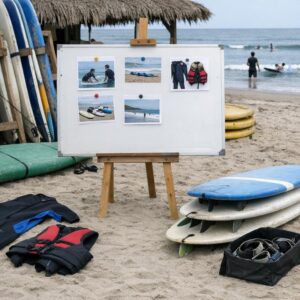
Essential beginner surf gear should prioritize safety over style. Use a soft-top surfboard with enough volume, a properly sized leash, surf wax, reef-safe sunscreen, and a wetsuit if the water is cold; the cost is usually lower than replacing damaged equipment or dealing with an injury. A waterproof watch, basic first aid kit, and paid beginner surf coaching can also be smart investments, especially when learning at unfamiliar beaches.
How to Start Surfing Step by Step: From Beach Practice to Catching Your First Whitewater Wave
Start on the sand before you enter the water. Place your soft-top beginner surfboard on the beach, lie with your chest centered, and practice your pop-up until your feet land naturally: front foot between your hands, back foot near the tail, knees bent, eyes forward.
Next, watch the surf for a few minutes. Use a surf forecast tool like Surfline to check wave height, tide, and wind, then choose a beginner-friendly beach with small whitewater waves and lifeguards. If the waves look powerful or crowded, book a licensed surf lesson instead of guessing.
- Walk out waist-deep while holding the board beside you, never between you and an incoming wave.
- Turn the board toward shore when a broken whitewater wave approaches.
- Paddle hard, feel the wave push you, then pop up smoothly and stay low.
A real-world example: many beginners rent an 8-foot foam board and a wetsuit from a local surf shop for their first session because it is cheaper than buying gear and safer than using a shortboard. Ask staff about board size, leash condition, water temperature, and any local hazards such as rocks or rip currents.
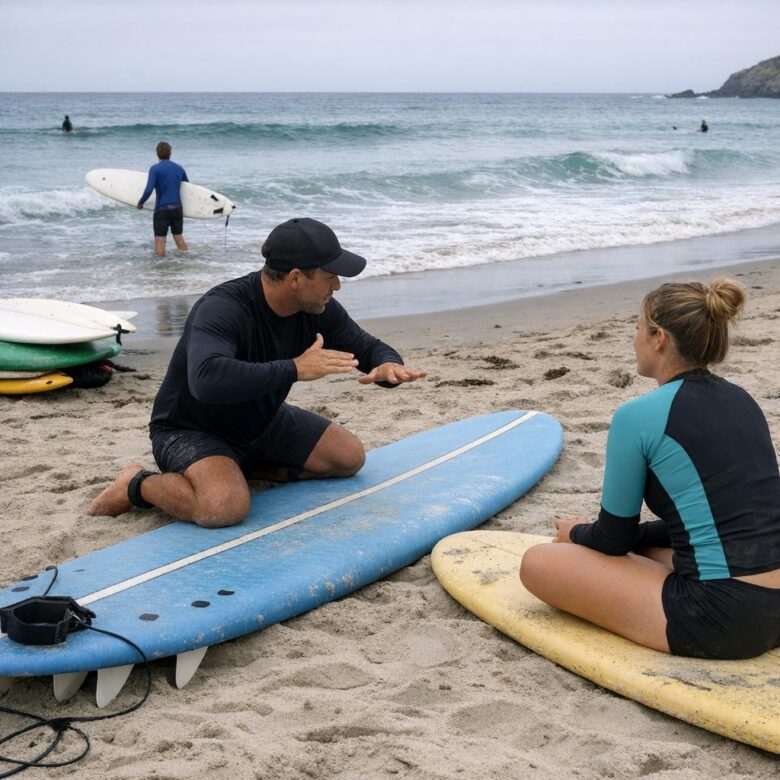
Your first goal is not turning or style. It is catching clean whitewater, standing for a few seconds, and stepping off safely in shallow water. Keep sessions short, rest often, and consider professional surf coaching if you feel nervous, as good instruction can reduce bad habits and improve safety from day one.
Common Beginner Surfing Mistakes to Avoid for Safer, Faster Progress
One of the biggest beginner surfing mistakes is choosing waves that are too powerful for your ability. Small, rolling whitewater is not “too easy” at the start-it is where you learn timing, balance, board control, and safe wipeouts without fighting heavy surf conditions.
Another common error is using the wrong surfboard. A shortboard may look exciting, but most beginners progress faster on a soft-top longboard with enough volume, especially when booking surf lessons or surfboard rental packages. In real sessions, I often see beginners struggle for an hour on a small board, then catch waves immediately after switching to a larger foam board.
- Skipping the surf forecast: Check wave height, wind, tide, and swell period on Surfline before paddling out.
- Paddling into crowded peaks: Start away from advanced surfers to reduce collision risk and avoid breaking surf etiquette.
- Ignoring equipment safety: Use the right leash, check fin condition, and consider reef booties if the beach has rocks or coral.
Many beginners also stand up too early or too upright. Keep your chest low during the pop-up, look where you want to go, and bend your knees once standing. Looking down at your feet usually leads to falling forward.
Finally, do not underestimate fatigue. Surfing uses your shoulders, core, and breath control more than most people expect. If your paddling gets sloppy or you cannot hold onto your board confidently, take a break; that simple choice can prevent injuries, damaged equipment, and costly emergency care while helping you improve faster next session.
Final Thoughts on How to Start Surfing Safely: A Beginner’s Step-by-Step Guide
Surfing safely starts with honest judgment: choose small, clean waves, use the right board, and never paddle out just to keep up with others. The best beginner session is one you can control, learn from, and finish confidently.
- If conditions feel confusing, take a lesson or wait for an easier day.
- If you are tired, cold, or anxious, come in before mistakes happen.
- If you want faster progress, prioritize consistency over intensity.
Start slow, respect the ocean, and let skill-not ego-decide when you are ready for more.