Your first surfboard can either speed up your progress-or make you hate surfing before you’ve even started.
Soft tops and hard tops may look similar from the beach, but they feel completely different in the water, especially when you’re learning to paddle, pop up, and handle wipeouts.
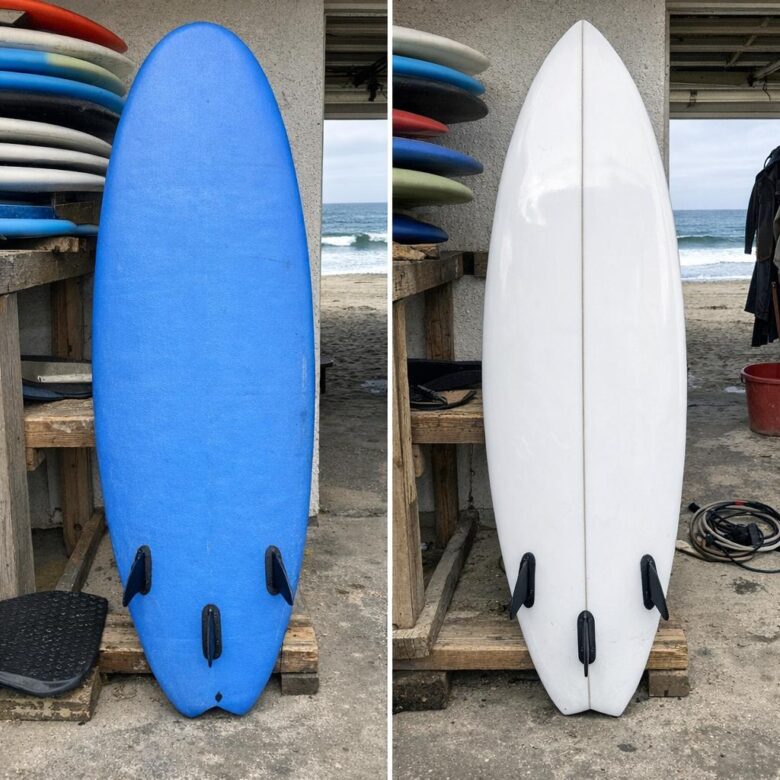
A soft top is usually safer, more forgiving, and easier for beginners, while a hard top offers sharper performance once your skills improve.
Before you buy the board that “looks right,” here’s how to choose the one that will actually help you catch more waves first.
Soft Top vs Hard Top Surfboards: Key Differences in Safety, Durability, Performance, and Price
Soft top surfboards are usually the safer first choice because the foam deck is more forgiving when you fall, collide with the board, or get pushed around in whitewater. In real beginner surf lessons, you’ll often see surf schools using soft tops because they reduce impact injuries and make paddling and catching waves easier.
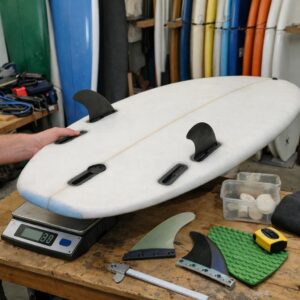
Hard top surfboards, often made with fiberglass or epoxy construction, offer better speed, sharper turns, and more responsive performance. The trade-off is that they are less forgiving, require better board control, and can be costly to repair if you ding the rail or crack the nose on rocks, parking lots, or crowded beach breaks.
- Safety: Soft tops are better for beginners, kids, and crowded surf spots.
- Durability: Soft tops handle bumps well, but hard tops last longer if properly stored in a board bag and repaired quickly.
- Performance: Hard tops are better for progression, carving, and surfing steeper waves.
Price is another major factor. A beginner soft top surfboard usually costs less than a quality hard top, especially when you include accessories like fins, leash, wax, roof racks, and surfboard repair kits. Checking wave conditions on Surfline before buying can also help you choose the right volume and shape for your local break instead of overspending on a board that does not match your conditions.
A practical example: if you surf twice a month in small beach-break waves, a durable 8-foot soft top is often the smarter investment. If you already catch waves consistently and want tighter turns, a hard top funboard or mid-length may be worth the higher cost.
How to Choose Your First Surfboard Based on Skill Level, Wave Conditions, and Progression Goals
Your first surfboard should match where you actually surf, not the board you hope to ride later. If you are learning in small, soft beach-break waves, a soft top surfboard in the 7’0” to 9’0” range usually gives better stability, safer wipeouts, and more wave time for the cost.
For complete beginners, prioritize volume, width, and forgiveness over performance. A 75 kg adult, for example, will usually progress faster on an 8’ foam board than on a short hard top, especially in weak summer waves where paddle power matters more than sharp turns.
- Beginner: choose a soft top longboard or funboard with high volume and a rounded nose.
- Improving surfer: consider a hybrid soft top or epoxy hard top if you can catch waves consistently and turn both ways.
- Progression-focused: move to a hard top when you want better rail control, speed generation, and responsiveness.
Wave conditions are the deciding factor many first-time buyers overlook. In crowded surf schools, rocky entries, or shore breaks, a soft top is practical and reduces damage risk; in cleaner point breaks or reef waves, an epoxy or fiberglass board may offer better performance and long-term value.
Before buying, check local surf forecasts on Surfline and compare board volume with your weight, fitness, and session frequency. If you surf once a month, durability and easy paddling matter most; if you surf weekly and want faster progression, investing in a quality beginner surfboard can save money on upgrades later.
Common First-Time Buyer Mistakes When Comparing Foam and Fiberglass Surfboards
One of the biggest mistakes beginners make is buying a fiberglass surfboard because it “looks more professional.” A hard top may feel faster and more responsive, but if you are still learning to paddle, pop up, and control the board in crowded beginner waves, the repair cost and ding risk can add up quickly.
I have seen new surfers buy a used fiberglass shortboard from Facebook Marketplace, only to struggle for weeks because it was too small and unstable. A 5’10” performance board might be a bargain, but it is usually the wrong first surfboard for someone still taking beginner surf lessons.
- Ignoring volume: Length alone is not enough. Check liters, width, and thickness before comparing soft top and hard top surfboards.
- Forgetting repair costs: Foam boards can get damaged too, but fiberglass surfboard repair usually requires resin, sanding tools, or a professional ding repair service.
- Buying for future skill, not current ability: Choose the board that helps you catch more waves now, not the one you hope to ride in six months.
Another overlooked factor is where you surf. If your local break has rocky entry points, strong shorebreak, or lots of beginners, a soft top surfboard is often the safer and more practical choice. For small, clean waves and a surfer with decent control, an epoxy or fiberglass longboard can make sense.
Before buying, compare new and used prices at a local surf shop, check rental options, and ask what board size they use for adult beginner surf lessons. That real-world reference is usually more useful than online reviews alone.
Final Thoughts on Soft Top vs Hard Top Surfboards: Which One Should You Buy First?
Your first surfboard should make progression easier, not more frustrating. For most beginners, a soft top is the smarter first buy: it is safer, more forgiving, durable, and gives you more chances to stand up and build confidence.
Choose a hard top only if you already have basic control, surf regularly, and want stronger long-term performance. If you are still learning wave timing, balance, and paddling, start with volume, stability, and comfort. The best board is the one that gets you in the water often-and helps you enjoy the learning curve.