The ocean doesn’t care how good the weather looks.
For beginner surfers and beach travelers, the biggest risks often hide in plain sight: rip currents, shifting tides, shorebreak, sharp reefs, and sudden fatigue.
This guide gives you the practical ocean safety basics that lifeguards, surf instructors, and experienced watermen rely on before entering the water.
Learn how to read beach conditions, choose safer swim and surf zones, avoid common mistakes, and respond calmly when the sea changes faster than expected.
Understanding Ocean Hazards: Rip Currents, Waves, Tides, and Marine Life Basics
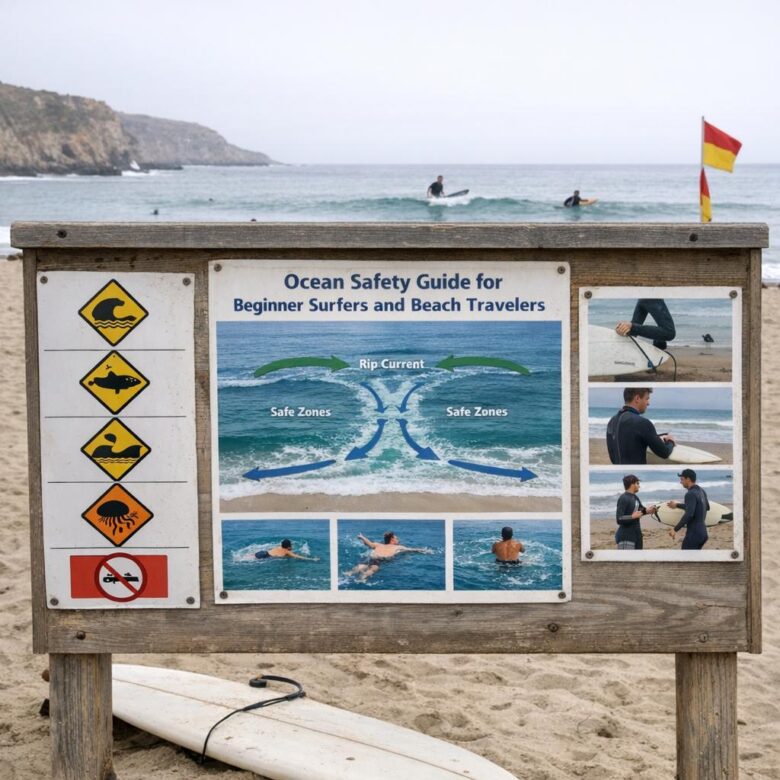
Rip currents are one of the biggest safety risks for beginner surfers and beach travelers because they can look like calm, darker channels between breaking waves. If you get caught, do not fight straight back to shore; float, signal for help, then swim parallel to the beach until you are out of the current. A common real-world sign is a gap where waves are not breaking while water appears to be moving seaward.
Waves and tides change the beach quickly, so check conditions before you paddle out or swim. Use Surfline or NOAA Tides & Currents to review swell size, tide timing, wind direction, and local beach safety alerts. As a practical rule, beginners should avoid steep shorebreak, rocks, jetties, and surfing near crowded swim zones, even if the waves look “small” from the parking lot.
- Low tide: Can expose reefs, rocks, and sandbars that increase injury risk.
- High tide: May create stronger shorebreak and less room to exit safely.
- Changing tide: Often shifts currents, especially near piers, channels, and river mouths.
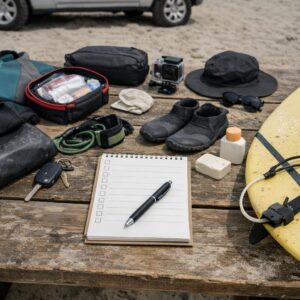
Marine life risks are usually manageable with awareness, not fear. Shuffle your feet in shallow sandy areas to avoid stepping on stingrays, avoid touching jellyfish or unknown sea creatures, and leave the water if baitfish are jumping or birds are diving aggressively. For added protection, consider practical beach safety equipment such as reef booties, a quality wetsuit, a waterproof phone case, and travel insurance that covers water sports if you are surfing abroad.
How to Read Beach Conditions Before Surfing or Swimming
Before entering the water, spend five quiet minutes watching the ocean. Look for wave size, how often sets arrive, where people are entering, and whether swimmers or beginner surfers are being pushed sideways. A beach can look calm from the parking lot but feel completely different once you are chest-deep in moving water.
Check a reliable surf forecast app such as Surfline, Windy, or Magicseaweed before you go. Focus on swell height, tide time, wind direction, and lifeguard reports rather than just the “good” or “poor” rating. For example, a 2-foot forecast with strong offshore wind may be manageable, while the same size with a dropping tide and rip currents can be risky for beginners.
- Rip currents: Look for darker, choppier channels, fewer breaking waves, or foam moving steadily away from shore.
- Wind: Onshore wind makes waves messy and harder to paddle through; offshore wind can create cleaner surf but stronger drift.
- Tide: Some beaches become shallow, rocky, or more powerful at low tide, increasing injury risk and insurance-worthy medical costs.
Always read posted beach safety signs and ask the lifeguard about current conditions, especially at an unfamiliar beach. In real-world surf lessons, instructors often move students 50 yards down the beach simply because one sandbar is safer than another. That small adjustment can be the difference between a controlled session and a stressful rescue situation.
Common Ocean Safety Mistakes Beginner Surfers and Beach Travelers Should Avoid
One of the biggest mistakes beginners make is treating a calm-looking beach as automatically safe. Rip currents, shore breaks, and sudden tide changes are not always obvious from the sand, so check local surf reports on Surfline and read posted lifeguard warnings before entering the water.
Another common error is using the wrong gear or skipping basic safety equipment to save money. A cheap leash, poor-fitting wetsuit rental, or cracked soft-top surfboard can turn a small wipeout into a serious problem, especially when you are far from shore or surfing near rocks.
- Ignoring lifeguard flags: Red or yellow flags are not suggestions; they reflect real-time ocean conditions.
- Surfing alone: Beginners should go with a friend, instructor, or local surf school for safer supervision.
- Leaving phones unprotected: Use a waterproof phone pouch and keep emergency contacts accessible.
A real-world example: I often see first-time surfers paddle straight into crowded lineup zones without understanding surf etiquette. This creates collisions, damaged boards, and potential injury costs that could have been avoided with a beginner surf lesson or a quick talk with a local instructor.
Beach travelers also underestimate sun exposure, dehydration, and medical expenses while on vacation. Pack reef-safe sunscreen, drinking water, a basic first aid kit, and consider travel insurance if your trip includes surfing, snorkeling, or boat activities, because ocean-related injuries can get expensive fast.
The Bottom Line on Ocean Safety Guide for Beginner Surfers and Beach Travelers
Ocean safety starts with a simple rule: respect the conditions before you enter the water. If the surf looks confusing, currents feel strong, or lifeguards advise caution, choose a safer beach, stay on shore, or book a lesson with a qualified instructor. Beginner surfers and beach travelers make better decisions when they check forecasts, swim near lifeguards, know their limits, and avoid going alone. The ocean can be welcoming, but it is never predictable. Treat every visit as a chance to enjoy the water wisely, not prove yourself against it.