A beach can look calm, warm and inviting while still containing currents, powerful shorebreak, changing water depth or weather that makes entering inappropriate. Safe decisions therefore begin before anyone swims, bodyboards or paddles out.
Beginner surfers and beach travelers do not need to predict every movement of the ocean. They do need a repeatable process for checking official information, reading local signs, choosing the correct activity zone and recognizing when the plan should stop.
This guide applies to recreational beach visits and beginner surfing. Local lifeguards, emergency services, coastal authorities and qualified instructors always take priority over general online advice.
Prepare the beach visit before leaving
A useful safety plan answers more than “Will it be sunny?” Check the conditions that can affect the complete visit, including the expected return time.
Check closures, water-quality notices, coastal warnings, lifeguard operating hours and restrictions on swimming, surfing or watercraft.
Review wind, rain, heat, visibility and thunderstorm risk. A beach plan should include a safe place to shelter from lightning.
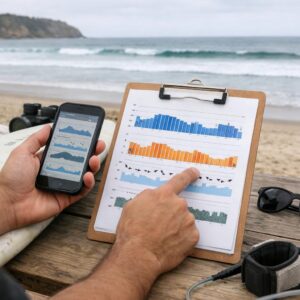
Read the local beach or surf forecast, including swell height, period, direction and any published rip-current risk.
Check the predicted water level at arrival and departure. High and low tide can alter hazards, access routes and usable beach space.
Choose surfwear for the water, air, wind and expected exposure rather than the air temperature alone.
Save the correct local emergency number and keep a charged means of calling for help accessible on shore or in suitable waterproof equipment.
For a more detailed forecast process, use the Didsurf guide to reading surf forecasts before choosing a beach.
Follow a ten-minute arrival routine
Do not change clothes immediately and enter based on the view from the parking area. Walk close enough to assess the surf zone and watch several complete wave sets.
Use the correct zone for the activity
Separating swimmers from surfboards and other craft reduces crossing paths and makes supervision easier. Flag colors and symbols vary between countries, so read the sign displayed at the beach instead of relying only on memory.
Use the designated supervised area
At beaches using the RNLI system, red-and-yellow flags identify the lifeguarded swimming and bodyboarding zone. Other countries may use different colors or arrangements.
Stay within the craft zone
In the RNLI system, black-and-white chequered flags mark surfboard and non-powered craft areas. Swimmers should not enter that zone.
Do not negotiate with a warning
A red beach flag in the RNLI system means dangerous conditions and no water entry. Follow the equivalent closure signal used by the local authority.
Flags can also move during the day as tide, crowd and conditions change. Recheck them after a break rather than returning automatically to the original area.
Recognize the main beach hazards
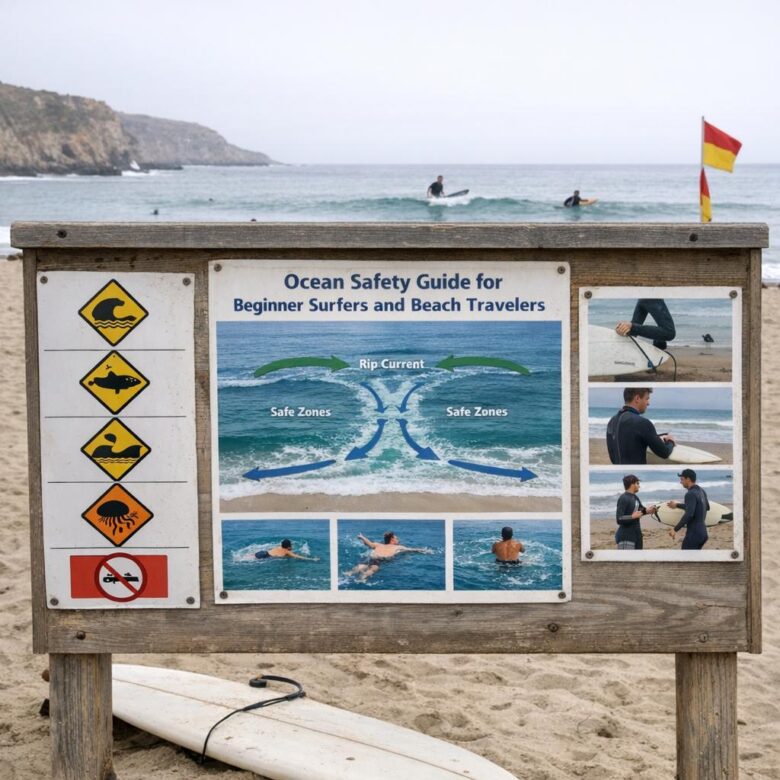
Rip currents move water away from shore. They may appear as channels with fewer breaking waves, disturbed water or foam moving seaward, but visual signs are not always clear.
Waves breaking directly onto steep or shallow shoreline can create forceful falls. Do not dive headfirst into unknown depth or allow children to play where powerful waves collapse onto the sand.
Changing water level can expose rocks and reef, deepen channels, reduce beach space, cover access paths or alter where waves break.
Wind can increase surface difficulty, produce drift and carry inflatables or lightweight equipment away from shore. Offshore wind does not automatically mean safe surf.
Lightning, heavy rain, poor visibility and heat can make the beach unsafe even when the waves themselves remain manageable.
Reef, marine animals, contaminated water, submerged objects, fishing equipment and coastal structures require location-specific advice rather than universal rules.
Rip-current safety for swimmers and surfers
A calm-looking channel may still be moving quickly
Do not enter a darker or quieter section simply because fewer waves are breaking there. The appearance could indicate a channel carrying water away from shore.
The most reliable prevention is to choose a lifeguarded beach, remain in the designated area for your activity and ask where currents are operating that day.
Surfers should not intentionally use a rip to paddle outside merely because experienced local surfers appear to do so. Their equipment, skill and knowledge may be very different.
- Stay as calm as possible.
- Keep hold of the surfboard or flotation when you can.
- Do not exhaust yourself fighting directly against the strongest flow.
- Raise an arm and call for help.
- Move parallel to shore or out of the current when able.
- Return toward shore after leaving the strongest flow.
Conditions differ between beaches. Follow the lifeguard’s instructions and float to regain control of breathing when swimming immediately is not possible.
Tide changes more than water depth
Use an appropriate official tide station as a planning reference, but continue observing the actual shoreline. The nearest station may not exactly match a bay, river mouth or distant section of coast.
| Tide-related change | Possible effect | What to check |
|---|---|---|
| Falling water | Reef, rocks, sandbars and shallow channels may become exposed. | Whether the practice or swimming area remains deep enough and free from hard hazards. |
| Rising water | Beach space and access around cliffs, walls or rocks may disappear. | Whether the exit route will still exist at the planned return time. |
| Changing shoreline | Waves may begin breaking closer to shore or in a different area. | Whether swimmers and surfers need to move with the supervised zone. |
| Current interaction | Water movement around channels, river mouths, piers and headlands may change. | Local lifeguard advice and visible drift rather than a universal high- or low-tide rule. |
| Shorebreak | Some beaches become more forceful at particular water levels. | The actual breaking pattern, not an assumption that high or low tide is always safer. |
Weather hazards can end the beach day
Lightning
If thunder is heard or lightning is seen, leave the water and beach area promptly. Move to a substantial enclosed building or hard-topped vehicle rather than a small open shelter.
Heat and sun
Use shade, protective clothing, drinking water and sunscreen according to its label. Headache, dizziness, weakness, nausea or unusual heavy sweating are reasons to stop and cool down.
Wind and visibility
Strong wind can move people and equipment, while fog, heavy rain or glare can make supervision and return landmarks difficult to maintain.
Do not rely only on the marketing term “reef-safe” when choosing sun protection. Follow local ingredient rules, use protective clothing and apply the selected product as directed.
Warm air does not guarantee warm water
The RNLI classifies water at 15°C or below as cold water and warns that sudden entry can seriously affect breathing and movement. A sunny day can therefore create a misleading sense of comfort.
Review local water temperature rather than estimating it from the air.
Use thermal protection suited to the activity and expected exposure.
Follow local guidance and avoid an uncontrolled jump into cold water.
End the session before shivering or reduced coordination affects control.
Beginners choosing surfwear can use the Didsurf wetsuit buying guide to compare thickness, fit and construction.
Different beach users require different controls
Swimmers and bodyboarders
- Use the locally designated supervised swimming area.
- Do not swim alone or outside the marked zone.
- Avoid craft zones, fishing areas and rocky entries.
- Do not overestimate pool swimming ability in moving water.
Beginner surfers
- Use the designated surf zone and suitable equipment.
- Maintain enough space for the board and leash.
- Begin with qualified instruction at unfamiliar beaches.
- Do not follow advanced surfers into a current or crowded peak.
Children and inexperienced water users
- Provide continuous, close and active adult supervision.
- Choose a lifeguarded beach whenever practical.
- Teach children to stop when called and how to float.
- Do not treat toys or inflatables as rescue equipment.
Inflatable users
- Follow local restrictions and lifeguard instructions.
- Do not use inflatables in offshore or strong winds.
- Avoid surf zones, craft channels and moving currents.
- Do not tether a child to equipment that can be carried away.
People who are not confident swimmers should not use a surfboard, bodyboard or inflatable as a substitute for swimming ability and appropriate supervision.
Inspect equipment before entering
- The surfboard has no open damage, exposed foam or sharp edges.
- Fins are compatible, secure and free from major damage.
- The leash cord, cuff, swivels, rail saver and string are intact.
- The wetsuit or surfwear allows breathing and shoulder movement.
- Footwear is suited to the entry when locally recommended.
- Drinking water and warm or dry clothing are available on shore.
- A charged means of calling for help remains accessible.
- Someone knows the beach, activity zone and planned return time.
A waterproof phone pouch may be useful for some beach activities, but no consumer pouch or mobile signal should be treated as a guaranteed rescue system. Choose communication appropriate to the activity and location.
The beginner surf gear checklist provides a more detailed equipment inspection.
What to do when you are in difficulty
Practise floating in a supervised pool or controlled environment before relying on it during an emergency.
Help another person without becoming a second casualty
Call trained help
Alert the lifeguard or call the local emergency service. Give the beach name, nearest landmark and description of the person.
Keep pointing
Maintain visual contact and show responders where the person is located as currents and waves move them.
Provide flotation when possible
Throw suitable flotation or follow responder instructions. Do not attempt an untrained swimming rescue in moving water.
Marine life and water quality require local guidance
Do not touch jellyfish, coral, unknown animals or creatures washed onto the sand. Some organisms can still sting after they appear inactive.
First-aid advice for stings and bites differs by species and region. Report the incident to a lifeguard and follow the locally approved treatment rather than applying a remedy remembered from another country.
Obey beach closures and water-quality advisories. Leave the water when authorities report contamination, a harmful algal event or another local environmental risk.
Reef shoes or boots may reduce some cuts, but they do not make shallow reef, powerful waves or a difficult exit appropriate for beginners.
Stop or change the plan when these signs appear
- A closure, warning or red-equivalent flag is displayed.
- Lifeguards advise against your planned activity.
- The larger wave sets exceed your demonstrated ability.
- You cannot identify the correct activity zone.
- The original exit route is becoming blocked by the tide.
- People or equipment are drifting noticeably along or away from shore.
- Thunder is heard or lightning is visible.
- Cold, heat, pain, illness or fatigue is affecting coordination.
- The board, leash, fins or thermal equipment develops a problem.
- Children cannot be supervised continuously.
- Visibility deteriorates or the group becomes separated.
- You feel pressured to enter because time or money has already been spent.
A final sixty-second check
Beginners planning their first sessions should also review how to start surfing safely. Travelers visiting unfamiliar coastlines can use the surf trip safety checklist.
Ocean safety is a decision process
Check official information before leaving, then reassess the actual beach. Read local signs, use the correct activity zone and speak with lifeguards when the coastline is unfamiliar.
Know how to float, recognize when a current is moving you and keep a safe method of calling for help. Protect children and inexperienced water users with active supervision rather than relying on toys or equipment.
The safest beach visit is not the one in which the original plan happens at any cost. It is the one that can move zones, change activities or remain on shore when conditions demand it.
Frequently asked questions
Does calm weather mean the ocean is safe?
No. Rip currents and dangerous waves can occur on sunny days. Check official beach information, talk to lifeguards and assess the actual water before entering.
What does a red flag mean at the beach?
In the RNLI system, a red flag means dangerous conditions and no water entry. Flag systems vary internationally, so read the signs displayed at the beach and follow the local authority’s instructions.
Should I swim in a gap where fewer waves are breaking?
Not automatically. A quieter-looking channel may contain water moving away from shore. Use the designated swimming area and ask a lifeguard about currents.
What should I do if I cannot swim back to shore?
Stop fighting the water, float to control your breathing, signal for help and keep hold of flotation or a surfboard when possible. If caught in a rip, avoid exhausting yourself against the strongest flow and follow local rescue guidance.
Can children use inflatable toys in the ocean?
Inflatables can be carried by wind and current and should not replace close adult supervision or suitable flotation equipment. Follow local restrictions and do not use them in offshore or strong wind.
Is a lifeguarded beach completely safe?
No beach is risk-free. Lifeguard supervision, marked zones and current local advice reduce uncertainty, but visitors must still follow instructions and stay within their ability.
Should I enter the water to rescue someone?
Untrained entry can create a second casualty. Alert lifeguards or emergency services, keep pointing toward the person and provide flotation from shore when safely possible.
Are reef shoes enough protection at a reef beach?
No. Footwear may reduce some cuts but cannot remove shallow reef, current, powerful waves or difficult access. Beginners still need an appropriate location and local guidance.
Ocean, weather and beach-safety references
- RNLI: beach safety, lifeguarded beaches, emergency calls and Float to Live
- RNLI: beach flags, swimming zones, craft zones and closure warnings
- RNLI: rip-current prevention and response
- RNLI: Float to Live technique
- RNLI: cold-water shock, breathing and movement
- U.S. National Weather Service: beach hazards, lightning and UV exposure
- U.S. National Weather Service: rip-current forecasts and lifeguarded beaches
- U.S. National Weather Service: lightning safety
- NOAA Tides and Currents: official tide-prediction stations
- CDC: hydration, heat exposure and warning symptoms
- NOAA Ocean Service: sun protection and marine-life considerations
Flag systems, emergency numbers, marine-life risks, water-quality alerts and local rules vary by country and beach. Verify them through the responsible coastal authority before entering the water.