The board is only one line on a beginner’s packing list. The harder part is bringing the right equipment for the water, weather, beach access and type of session without filling the car with things you do not yet know how to use.
A first lesson may require little more than swimwear, sun protection, water and a towel because the school provides the board, leash and wetsuit. An independent practice session is different: you are responsible for checking every piece of equipment before leaving home and again before paddling out.
This checklist separates genuine essentials from condition-dependent items and optional accessories. It also corrects a common shopping mistake: there is no universal board size, wetsuit thickness or packing list that works at every coast.
Use the list as a preparation tool, not as permission to enter the water. Local conditions, lifeguard instructions and your current ability remain more important than having a complete gear bag.
Start with one question: are you renting or bringing your own equipment?
Your personal bag can stay simple
Confirm what the school provides before buying anything. Beginner lessons commonly include a suitable soft board, leash and wetsuit, but packages vary.
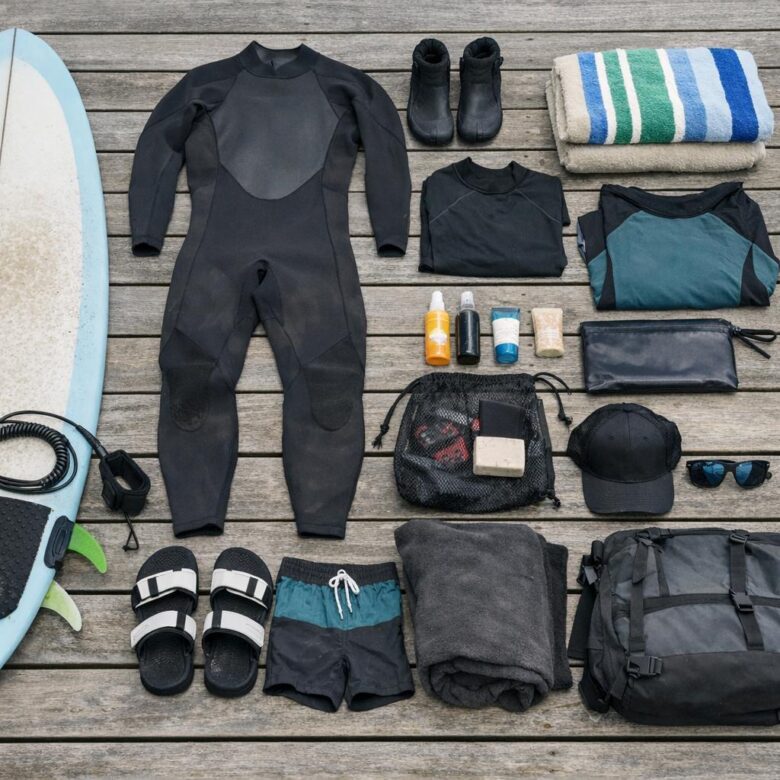
- Swimwear to wear under the wetsuit
- Towel or changing robe
- Drinking water
- Sun protection
- Dry clothes for afterward
- Any required medication disclosed to the instructor
You are responsible for the full setup
Bring equipment that matches your ability and inspect it before entering the water. Do not assume a recently purchased item is correctly fitted or assembled.
- Board suited to your current level
- Secure fins and correct hardware
- Surf leash in good condition
- Wax or traction appropriate for the board
- Suitable thermal and sun protection
- Safe transport and key-storage plan
The complete beginner surf packing manifest
Equipment that goes into the water
-
Beginner-appropriate surfboard Essential
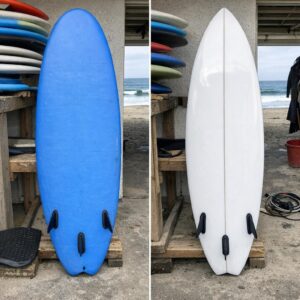
A wide, stable soft-top board is often a practical starting point, but length alone does not determine suitability. Body size, board volume, mobility, wave type and instruction all matter. Avoid choosing a small performance board only because it is easier to carry.
-
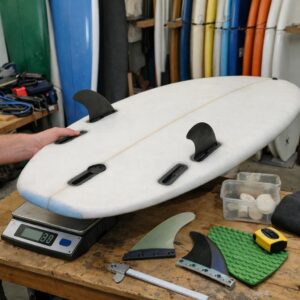
Fins and fin hardware Essential
Confirm that every fin is present, correctly positioned and firmly secured. Bring the correct fin key or tool when your system requires one, but do not overtighten screws or force incompatible parts.
-
Straight surf leash in suitable condition Essential
The leash helps prevent separation from the board after a fall. Inspect the cord, cuff, swivels, rail saver and attachment point. A leash can break and is not a rescue device, a substitute for swimming ability or permission to surf beyond your limits.
-
Wax or deck traction Board-dependent
Many hard boards need wax on the deck for grip. Select wax according to the water-temperature range printed on the package, not the air temperature in the parking lot. Some foam boards have textured decks or specific manufacturer instructions, so ask before adding wax.
-
Wetsuit, rash guard or other suitable surfwear Conditions
Choose clothing according to water temperature, wind, session length and personal cold tolerance. A rash guard reduces friction and sun exposure but does not provide the same insulation as a wetsuit.
-
Boots, hood, gloves or helmet Situational
These may be appropriate in colder water, on certain rocky entries, during supervised beginner programs or where local guidance recommends them. Fit and suitability matter; do not add specialist equipment without understanding how it affects movement and safety.
Protection and comfort for your body
-
Broad-spectrum, water-resistant sunscreen Essential
Use a product suited to your skin and follow the label for application and reapplication. No sunscreen is completely waterproof. Water-resistance claims refer to a tested period, commonly shown on the label as 40 or 80 minutes.
-
Sun-protective clothing and shade Recommended
A long-sleeve surf top, hat for time on shore, sunglasses with verified UV protection and access to shade reduce dependence on sunscreen alone. Remove loose sunglasses and hats before surfing unless they are designed and secured for that activity.
-
Drinking water Essential
Bring enough for the session, travel time and weather. Leave the bottle on shore or in the vehicle rather than trying to surf with it. Avoid glass containers at the beach.
-
Simple food for after the session Useful
A familiar snack can help after a longer session, especially when the beach is far from services. Do not enter the water exhausted, dehydrated or immediately after a very heavy meal.
-
Personal medication Personal
Bring prescribed emergency medication when required and explain relevant health concerns to the instructor before the lesson. Store medication according to its instructions and keep it accessible to the responsible person on shore.
Items that stay on the beach or in the car
-
Towel, changing robe and dry clothes Practical
Pack them separately from wet equipment. A changing mat, reusable tub or waterproof bag can keep sand and saltwater away from the rest of your belongings.
-
Secure plan for keys and phone Essential
Do not assume a phone pouch or electronic car key is safe underwater. Consider a manufacturer-approved non-electronic valet key, supervised storage or a properly installed lockbox. Avoid hiding keys under a tire or in an obvious beach location.
-
Small first-aid kit Useful
Basic supplies can help with minor cuts after you leave the water. They do not replace lifeguards, emergency services or medical assessment. Serious injuries, breathing problems, head impacts and worsening symptoms need appropriate professional help.
-
Board bag or protective cover Transport
A cover reduces sun, heat and impact exposure during transport and storage. Do not leave boards or wetsuits in extreme heat longer than necessary, and follow the equipment manufacturer’s care guidance.
-
Correct roof-rack equipment Vehicle-dependent
Use racks, pads and straps approved for your vehicle and load. Follow the rack, strap and vehicle instructions, secure loose ends and stop to recheck the load. Do not rely on improvised cords or assume a board is secure because it does not move while parked.
-
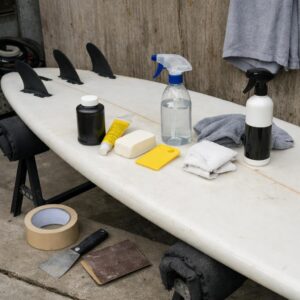
Small repair and tool pouch Experienced use
A fin key, spare compatible hardware and temporary repair material may save a trip, but repairs must suit the board material and usually require a clean, dry surface. Major damage or water entry should be assessed properly before the board returns to the ocean.
The 60-second equipment check before you walk toward the water
Most packing mistakes are visible before the session starts. A quick inspection is more useful than discovering a loose fin or damaged leash after you are already beyond standing depth.
- Look over the board. Check for open cracks, sharp damage, loose parts or a waterlogged feel.
- Press each fin gently. It should not wobble or slide out of position.
- Trace the leash from cuff to rail saver. Look for cuts, hardened sections, damaged swivels and weak attachment cord.
- Check the deck grip. Add suitable wax only when the board needs it.
- Test the wetsuit or surfwear fit. You should be able to breathe, paddle and move without painful restriction.
- Confirm the key plan. Decide where valuables will stay before changing clothes.
A newly purchased leash or board can still be incorrectly assembled. When in doubt, ask the rental shop, surf school or experienced equipment technician to inspect the setup.
A leash is important, but it does not control the board for you
It helps keep you connected to the surfboard after a fall, reducing the chance of becoming completely separated from it. It should be worn as intended and inspected regularly.
It does not prevent the board from striking someone, guarantee flotation, eliminate the need to swim or make powerful conditions appropriate for a beginner.
Keep a safe distance from anyone in front of you. Do not deliberately throw the board when another person could be behind it. During a fall, follow the technique taught by your instructor and protect your head as you return to the surface.
Leash type, length and strength should suit the surf craft and intended conditions. A leash designed for another activity or a visibly worn secondhand leash may not be appropriate.
Choose a wetsuit from conditions, not from a universal internet chart
Charts that match one exact wetsuit thickness to one water temperature are only starting references. Individual cold tolerance, wind, sunlight, session duration, body movement and suit quality can change how warm the same thickness feels.
Consider these factors together
A wetsuit should fit closely while still allowing normal breathing, shoulder movement and a comfortable surf stance. Large folds, open gaps and excessive flushing can reduce warmth. A painfully tight neck, chest or shoulder area can restrict movement and make the session unpleasant.
Renting is useful before buying because two suits labeled with the same size may fit differently. Try the suit with the movements you will perform: paddling posture, squatting, lifting the arms and rotating the shoulders.
A rash guard may be enough in genuinely warm water when local conditions permit, but it is mainly useful for sun and friction protection. It should not be treated as cold-water equipment.
Use more precise sun protection than the words “reef-safe”
The phrase “reef-safe” can be used inconsistently and should not be the only reason you select a product. Check the active ingredients, follow local environmental rules and read the full sunscreen label.
For skin protection, choose a broad-spectrum sunscreen and look for a water-resistance period appropriate to the activity. Apply it as directed before sun exposure and reapply according to the label, especially after swimming, sweating or toweling.
No sunscreen blocks all ultraviolet radiation, and no sunscreen is completely waterproof. Combine it with protective clothing, shade, a hat while on shore and sunglasses with verified UV protection.
NOAA notes that some ultraviolet-filter ingredients can affect corals and other aquatic organisms, while protective clothing reduces the amount of sunscreen needed on covered areas. Regulations and restricted ingredients differ by destination, so check the rules for the coast you are visiting.
What a beginner usually does not need to buy immediately
Surf retailers sell many useful products, but usefulness depends on your local beach, equipment and frequency of surfing. These items can wait until a real need appears.
A smaller board generally demands stronger paddling, faster positioning and better timing. Buy for your current ability rather than the image you want later.
Minor tools are useful only when you understand the material and repair. Improper repairs can trap water or create sharp, weak areas.
Beginners benefit more from secure, compatible fins and consistent practice than from changing fin templates after every session.
A normal towel and private changing plan may work perfectly well. Upgrade later if cold weather and frequent sessions justify it.
Buy the formula suited to your local water and board. Collecting every temperature range adds clutter without improving technique.
The simplest plan is often to leave valuables securely on shore rather than trusting phones, earbuds or electronic keys in moving saltwater.
Before purchasing a board, read our beginner surfboard buying guide and, when possible, rent more than one suitable model.
Three realistic packing examples
Your first surf lesson
- Swimwear
- Towel and dry clothes
- Water
- Sun protection
- Required medication
- Booking details
The school should confirm whether the board, leash and wetsuit are included.
Independent warm-water practice
- Suitable board and secure fins
- Inspected leash
- Wax if required
- Rash guard or local surfwear
- Sun protection
- Water, towel and key plan
Warm water does not remove the need to check wind, tides, currents and ability level.
Cold or exposed coastline
- Suitable wetsuit
- Condition-specific boots or hood
- Board, fins and leash
- Warm dry clothing
- Hot or insulated drink for afterward
- Shorter session plan
Follow local guidance and end the session before cold, fatigue or reduced coordination becomes a problem.
Transport the board without creating a road hazard
A board that does not fit inside the vehicle needs a rack system designed for the vehicle and load. Use the correct pads and straps, follow all manufacturer instructions and respect local transport laws.
Before driving:
-
Check the rack attachment
The rack itself must be secure before the board is loaded.
-
Protect the board from hard contact
Use suitable rack pads or the protective system specified for your setup.
-
Secure the board with approved straps
Avoid improvised elastic cords. Check strap routing, tension and loose ends.
-
Test the load before moving
Apply controlled pressure and confirm that the board and rack do not shift.
-
Recheck during the journey
Stop safely after the first part of the trip and after major weather or road-condition changes.
The final beach-arrival sequence
Do not change clothes and walk directly into the ocean. Spend a few minutes observing the beach and confirming that the session still makes sense.
Use a go-or-stop decision, not a complete-bag decision
Having every item on the checklist does not mean the session should proceed. Equipment preparation and ocean judgment are separate responsibilities.
Reasonable signs to continue preparing
- The conditions match your current ability.
- The board and leash pass inspection.
- You understand the entry and exit route.
- You are warm, hydrated and physically well.
- The designated surf area is clear.
- You have another surfer, instructor or appropriate supervision.
Reasons to stay out or seek advice
- The leash, fins or board are damaged.
- You cannot identify a safe entry or exit.
- The waves or current exceed your ability.
- Lifeguards or authorities advise against entering.
- You are alone, exhausted, ill, cold or unsure.
- The beach has access, wildlife or environmental restrictions.
A simpler bag usually works better
A useful beginner setup is not the most expensive or visually impressive one. It is the setup you can inspect, carry, fit correctly and use in conditions that match your experience.
Begin with a suitable board, secure fins, a sound leash, the right clothing for the water, sun protection, drinking water and a safe plan for valuables. Rent condition-specific equipment until you understand what your local sessions regularly require.
Most importantly, do not let the effort of packing pressure you into surfing. Turning around because the conditions changed, the equipment failed inspection or the beach feels beyond your ability is a successful safety decision—not a wasted trip.
Editorial and safety references
- RNLI: surfing safety and equipment guidance
- Surfing England: surf equipment overview
- U.S. Food and Drug Administration: sunscreen and sun-protection guidance
- NOAA: sunscreen ingredients and marine life
Equipment recommendations, beach flags, environmental rules and water-safety practices vary by location. Follow the guidance issued by the relevant coastal authority, surf school, lifeguard service and equipment manufacturer.