Your surfboard is tougher than it looks-until one tiny ding lets water in.
Salt, sun, heat, careless transport, and small impacts can quietly shorten a board’s life long before it snaps or delaminates.
Good surfboard care isn’t complicated; it’s a set of simple habits that protect your rails, deck, fins, and foam from avoidable damage.
This guide shows you how to store, clean, transport, inspect, and repair your board so it stays fast, strong, and ready for the next session.
Why Surfboards Get Damaged: UV Exposure, Saltwater, Pressure Dings, and Heat
Most surfboard damage starts small, then gets expensive when it is ignored. UV exposure, saltwater, pressure dents, and heat all weaken the board in different ways, which is why good surfboard maintenance can save you the cost of a professional surfboard repair later.
Sunlight is one of the biggest culprits. Long UV exposure can yellow epoxy and fiberglass boards, weaken resin, and make the outer shell more brittle, especially if the board is stored on roof racks or left uncovered on the beach.
Saltwater is another slow problem. If water gets into a crack or tiny ding, it can soak into the foam core and cause discoloration, added weight, delamination, or soft spots that are harder and more expensive to fix.
- Pressure dings: Usually caused by knees, heels, car racks, or stacking boards without padding.
- Heat damage: Often happens inside hot cars, garages, or black board bags left in direct sun.
- Open cracks: Small fractures can let water in after just one surf session.
A real-world example: a surfer leaves a board in the car after a morning session, still wet and sealed in a bag. By afternoon, trapped heat and moisture can create bubbling, lifted glass, or a soft deck area that may need a surfboard repair kit or shop service.
For quick fixes, products like Solarez UV Cure Ding Repair are useful for sealing minor cracks before water intrusion gets worse. Still, prevention is cheaper: rinse with fresh water, use a reflective board bag, avoid hot storage, and check rails and the tail after every session.
How to Clean, Dry, Store, and Transport Your Surfboard Safely After Every Session
After surfing, rinse your board with fresh water as soon as possible, especially around the leash plug, fin boxes, and traction pad edges. Salt crystals can work into tiny cracks and speed up delamination, so a quick rinse is cheap protection compared with professional surfboard repair costs.
Use a soft towel or microfiber cloth to dry the board before putting it in a surfboard bag. I’ve seen boards come out of a hot car with wax melted into the fabric lining simply because they were packed wet and left in direct sun. Small habits matter.
- Check for pressure dents, rail cracks, and fin box movement before storing.
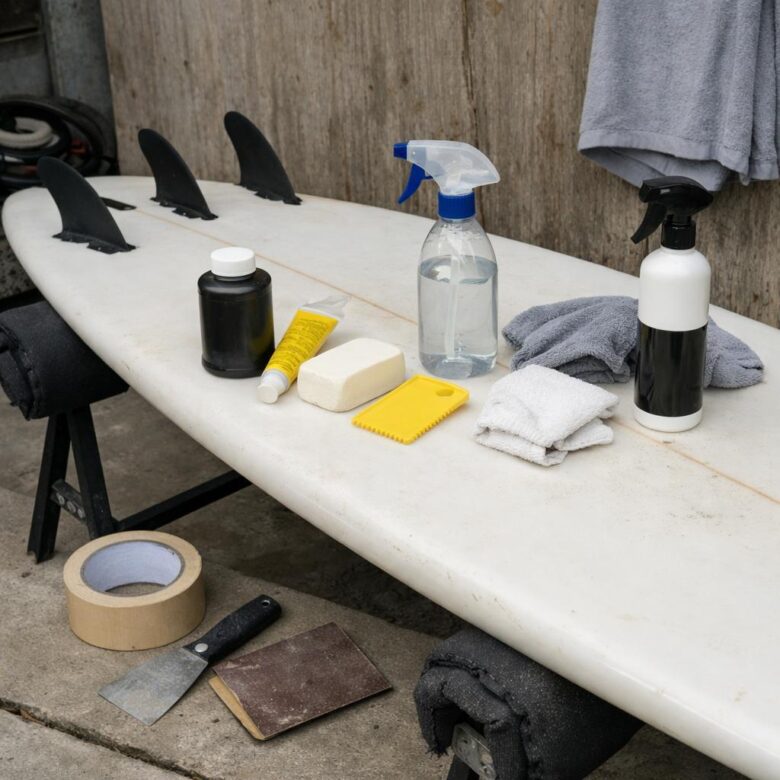
- Keep a basic ding repair kit, such as Solarez, in your car for small emergency fixes.
- Remove or loosen fins if the board will travel in a tight board bag or roof rack setup.
Store your surfboard in a cool, shaded place, ideally on a padded wall rack or horizontal surfboard storage rack. Avoid leaning it on concrete, metal edges, or garage corners where one slip can crush the rail.
For transport, use a padded surfboard travel bag for longer drives and a UV-resistant day bag for regular beach runs. If you use a car roof rack, secure the board with proper surf straps, not bungee cords, and place the nose forward and deck down to reduce wind lift.
Before flights or long road trips, add extra rail padding with towels or pipe insulation. It is a simple, low-cost step that can prevent expensive epoxy surfboard repair, fin box replacement, or airline damage claims later.
Common Surfboard Care Mistakes That Lead to Cracks, Delamination, and Fin Box Damage
Most serious surfboard damage starts with small habits that seem harmless. Leaving a board in a hot car, resting it deck-down on rough concrete, or surfing with an open ding can turn a cheap repair into a higher surfboard repair cost, especially if water reaches the foam core.
One mistake I see often is riders ignoring tiny rail cracks after a normal beach session. For example, a small pressure ding near the nose may look cosmetic, but after two more surfs it can absorb water, cause yellowing, and eventually lead to delamination where the fiberglass skin separates from the blank.
- Skipping ding repair: Seal cracks immediately with a proper epoxy resin repair kit or UV cure resin like Solarez, depending on your board construction.
- Overtightening fins: Cranking screws too hard can stress the fin box, strip threads, or create hairline cracks around the plug.
- Poor transport habits: Use a padded board bag, roof rack pads, and tie-down straps with light tension instead of crushing the rails.
Fin box damage is especially common after shallow-water wipeouts or when the board is dropped tail-first in a parking lot. If a fin feels loose, do not keep surfing it; movement can enlarge the cavity and turn a simple fin screw fix into a full fin box replacement.
Good surfboard care is mostly prevention: rinse saltwater off, dry the board before storage, keep it out of direct heat, and inspect the rails, tail, leash plug, and fin boxes after each session. A two-minute check can save you money on professional ding repair services and keep the board performing the way it should.
Final Thoughts on Surfboard Care Guide: How to Protect Your Board From Damage
Protecting your surfboard is ultimately about consistency, not complicated routines. A few smart habits-rinsing after sessions, storing it out of heat and sun, fixing dings early, and using proper transport protection-can prevent most avoidable damage.
If you surf often, invest in a quality board bag, basic repair supplies, and a reliable storage setup. If your board is expensive, custom, or heavily used, don’t gamble with questionable cracks or water intrusion-get it checked professionally. Treat your board well, and it will stay faster, stronger, and ready for more sessions.