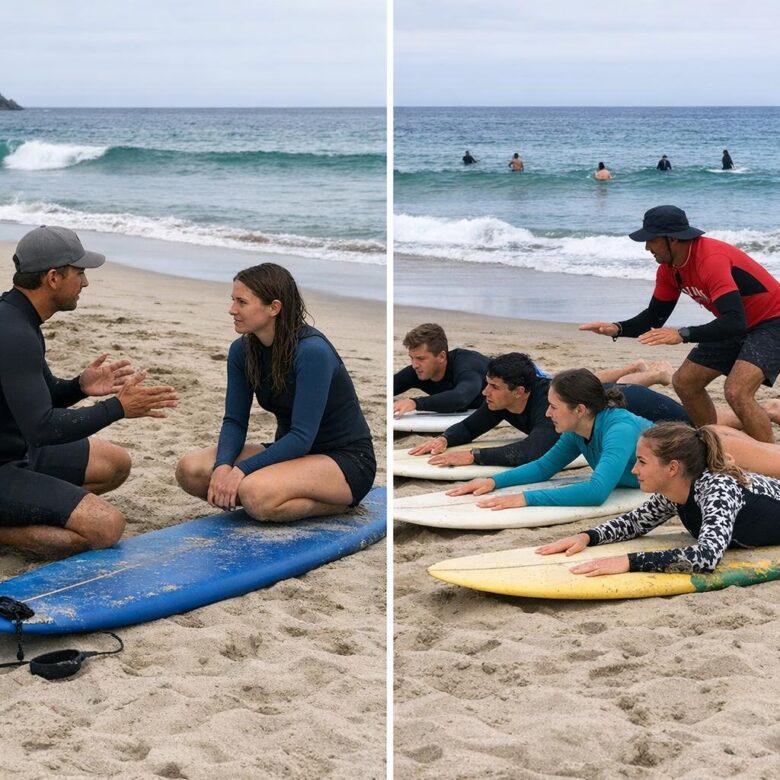
Is your first surf lesson setting you up to ride waves-or just survive them?
Choosing between private surf lessons and group surf classes can shape how quickly you improve, how safe you feel, and how much confidence you build in the water.
Private coaching gives you focused feedback and a lesson paced around your ability, while group classes offer energy, affordability, and a social learning environment.
The better choice depends on your goals, budget, fitness level, and whether you want fast progression or a fun shared experience.
Private Surf Lessons vs Group Surf Classes: Key Differences in Coaching, Cost, and Learning Pace
Private surf lessons give you one-on-one coaching, which means the instructor can adjust every detail: stance, paddle timing, board position, wave selection, and safety habits. In a group surf class, the coach has to divide attention between several students, so feedback is usually more general.
The biggest trade-off is cost. Private surf lessons typically cost more because you are paying for dedicated instructor time, personalized surf coaching, and often better scheduling flexibility. Group surf classes are more budget-friendly and can be a smart choice if you want a low-pressure introduction before investing in premium surf instruction.
- Private lessons: best for faster progress, nervous beginners, kids, intermediate surfers, or anyone fixing specific technique problems.
- Group classes: best for first-timers, friends, families, and travelers looking for an affordable surf school experience.
- Learning pace: private coaching moves at your speed; group lessons follow the average level of the class.
A real-world example: if you keep nose-diving on takeoff, a private instructor can spot whether the issue is late paddling, poor chest position, or choosing the wrong wave. In a group lesson, you may only hear “paddle earlier,” which helps, but may not solve the actual problem.
Booking platforms like BookSurfCamps can help compare surf lesson prices, instructor options, beach locations, equipment rental, and reviews. Before booking, ask about student-to-coach ratio, board type, wetsuit rental, insurance coverage, and whether video analysis is included, because these details can make a big difference in value.
How to Choose the Best Surf Lesson Format for Your Skill Level, Goals, and Budget
The best surf lesson format depends on what you need corrected, how quickly you want to improve, and how much you’re willing to spend. If you’re a total beginner who just wants a safe first experience, a group surf class is usually the better value because the surf instructor covers ocean safety, board handling, and basic pop-up technique at a lower cost.
Choose private surf lessons if you’re struggling with a specific issue, such as paddling efficiently, reading waves, turning, or rebuilding confidence after a bad wipeout. In real surf schools, I’ve often seen beginners progress faster in a one-on-one session simply because the coach can reposition them after every wave instead of managing six students at once.
- Beginner on a budget: group surf classes offer lower lesson cost and a social learning environment.
- Intermediate surfer: private coaching helps with wave selection, timing, and technique correction.
- Family or kids: semi-private lessons can balance safety, attention, and price.
Before booking, check what is included in the surf lesson package: wetsuit rental, soft-top surfboard, insurance, beach permits, and instructor certification can affect the real value. Use platforms like Google Maps or Tripadvisor to compare surf school reviews, but look beyond star ratings; comments about safety, equipment quality, and coach patience matter more than flashy photos.
If your goal is one fun vacation activity, book a group class. If your goal is measurable improvement, fewer bad habits, or preparing for better surf conditions, private surf coaching is usually worth the higher hourly rate.
When to Switch or Mix Surf Lesson Types: Hybrid Strategies and Common Mistakes to Avoid
The smartest option is often not “private vs group” but knowing when to use each. A good hybrid strategy is to book one private surf lesson first, especially if you are nervous, returning after an injury, or struggling with pop-up technique, then move into group surf classes once you can safely paddle, turtle roll, and follow basic surf etiquette.
For example, a beginner on a week-long surf trip might take a private coaching session on day one, join affordable group lessons for two or three days, then finish with another private lesson for video analysis and wave selection. This gives you the cost benefits of group training without missing the personalized feedback that speeds up progress.
- Switch to private lessons if you keep making the same mistake, feel unsafe in crowds, or need help choosing the right surfboard rental.
- Switch to group classes when you need more water time, confidence around other surfers, and a lower overall lesson cost.
- Mix both during surf camp packages, family vacations, or destination trips where conditions change daily.
One common mistake is booking the cheapest group class without checking instructor ratios, beach conditions, or whether wetsuit rental and surf insurance coverage are included. Use tools like Surfline to check wave height and tide timing before booking, then ask the surf school how they adjust lessons when conditions are too advanced for beginners.
Also avoid staying in private lessons too long if your goal is independence. At some point, practicing in a supervised group helps you learn real lineup awareness, which is something one-on-one coaching cannot fully recreate.
Summary of Recommendations
The better choice depends on your goal, budget, and comfort level. If you want faster progress, personalized correction, or extra confidence in the water, private surf lessons are usually worth the investment. If you prefer a social atmosphere, lower cost, and a relaxed introduction to surfing, group classes can be the smarter starting point.
For most beginners, the practical approach is simple: choose private coaching when safety, technique, or rapid improvement matters most; choose group lessons when fun, affordability, and shared experience are your priority. The best surf lesson is the one that keeps you motivated to paddle back out.