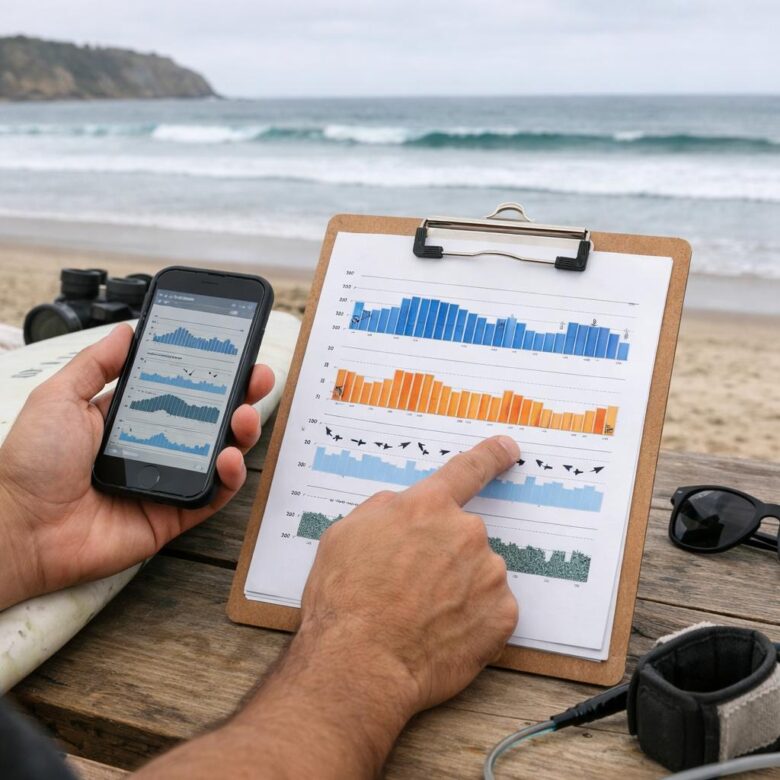
The wrong beach can turn a perfect swell into a wasted session.
Surf forecasts are more than wave-height numbers; they reveal how swell direction, period, wind, tide, and local bathymetry will actually shape the waves where you paddle out.
Learning to read them before choosing a beach helps you avoid blown-out peaks, dangerous currents, flat conditions, and overcrowded spots that looked good on paper.
This guide breaks down the key forecast signals so you can match the day’s conditions to the right break-and make smarter calls before you load the board.
What Surf Forecast Metrics Mean for Beach Choice: Swell, Wind, Tide, and Period
Surf forecast metrics only matter when you connect them to a specific beach. A 4-foot swell can be fun at a sheltered sandbar but heavy and closed-out at an exposed beach break. Before driving, compare the forecast with a live surf camera on Surfline, marine weather tools like Windy, and the beach’s known exposure.
- Swell height and direction: Height shows potential size, but direction decides whether the beach actually receives it. A south-facing beach may miss a northwest swell almost completely.
- Wind: Offshore wind usually cleans up the wave face, while strong onshore wind creates chop. Light wind early morning is often worth paying attention to in any surf forecast app.
- Tide and period: Tide changes how waves break; some reefs need more water, while some sandbars work best at mid tide. A longer swell period, such as 14 seconds, usually means more powerful waves than an 8-second wind swell of the same height.
Real-world example: if the report says 3-4 feet at 15 seconds with light offshore wind, an exposed beach may be punchy and advanced, while a protected cove could offer cleaner, beginner-friendly surf. If the same swell comes with strong onshore wind, choosing a beach with cliffs, dunes, or a harbor wall for wind protection can save the session.
The best beach choice comes from matching forecast data to local knowledge. Premium surf forecast services, tide charts, and live cameras are useful, but the key is learning which beaches handle certain swell directions, wind angles, and tide ranges best.
How to Match a Surf Forecast to the Right Beach Break, Point Break, or Reef Break
Start by matching the swell direction, period, tide, and wind to the type of wave you want to surf. A surf forecast app like Surfline or Magicseaweed-style forecast tools can show wave height, swell angle, tide charts, and live surf cams, but the real value comes from knowing which break handles those conditions best.
Beach breaks usually like shorter to mid-period swell and can change quickly with shifting sandbars, so check updated cams before driving. If the forecast shows 3-4 feet, light offshore wind, and a mid tide, a sand-bottom beach break may offer fun peaks for intermediate surfers without the commitment of a reef.
- Beach break: Best for flexible sessions, varied skill levels, and checking multiple peaks when conditions are inconsistent.
- Point break: Best when the swell direction lines up with the headland and the period is strong enough to wrap cleanly.
- Reef break: Best for experienced surfers when tide height, swell size, and local hazards are clearly understood.
For example, a west-facing beach may be messy on a strong west swell with onshore wind, while a nearby south-facing point could be cleaner because the swell wraps in and the headland blocks wind. I’ve seen many surfers waste fuel and parking fees chasing the biggest number on the forecast instead of choosing the break that fits the swell angle.
Reefs demand the most caution because a “small” forecast can still produce powerful waves if the swell period is long. Use premium surf forecast data, local tide charts, and a reliable surf watch or GPS weather device if you are traveling, especially when planning surf trips, lessons, board rentals, or coastal accommodation around one specific break.
Common Surf Forecast Reading Mistakes That Lead to Crowded, Flat, or Unsafe Sessions
One of the biggest mistakes is checking only wave height and ignoring swell period, wind direction, and tide. A forecast showing 4 feet can still be weak and messy if the period is short and the wind is blowing onshore, while a clean 2-3 foot groundswell with offshore wind can be far better for most surfers.
Another common error is trusting a single surf app without comparing it to local conditions. Tools like Surfline, Magicseaweed-style forecast models, Windy, and NOAA marine weather can all help, but the smartest call comes from matching the forecast with live surf cams, buoy readings, and local tide charts.
- Forgetting tide windows: Some beach breaks go flat at high tide or close out at low tide.
- Ignoring wind timing: A morning offshore can turn into afternoon chop fast.
- Following crowd ratings blindly: “Good” conditions often mean every surfer nearby is heading there.
A real-world example: if a popular beach shows 3-4 feet, light offshore wind, and a mid-morning incoming tide on a weekend, it may look perfect on a surf forecast app-but it will probably be packed. A nearby less famous beach with slightly smaller swell and better sandbanks could offer more waves, lower parking cost, and a safer session for beginners.
The most unsafe mistake is underestimating swell direction and current strength. Long-period swell can create powerful rip currents even when the beach looks manageable from the parking lot, so check lifeguard reports, surf cameras, and local beach safety updates before paddling out.
Key Takeaways & Next Steps
Reading a surf forecast well is less about chasing the biggest number and more about matching the day to your ability, equipment, and risk tolerance. Before you choose a beach, ask one simple question: will the conditions help me surf better, or just make the session harder?
- Choose sheltered spots when swell or wind looks challenging.
- Pick exposed beaches when conditions are small and clean.
- If the forecast feels uncertain, favor safety, local knowledge, and an easier paddle-out.
The best beach is not always the most famous one-it is the one where the forecast gives you the highest chance of a safe, enjoyable session.